
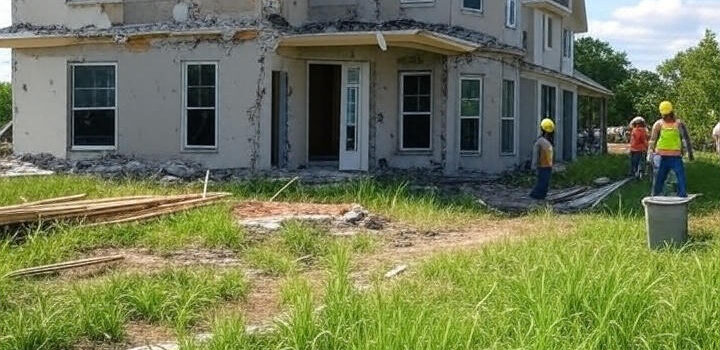
When buildings reach the end of their life cycle, owners are faced with a decision: should they demolish the structure or deconstruct it? While demolition may seem faster, it comes with significant environmental costs. Deconstruction, on the other hand, offers a sustainable alternative that reduces waste, conserves resources, and benefits both communities and ecosystems.
In this article, we’ll break down the top seven environmental benefits of deconstruction compared to traditional demolition.
1. Significant Waste Reduction
Demolition typically reduces a building to rubble, sending the majority of materials—wood, drywall, concrete, and metal—straight to landfills. In contrast, deconstruction carefully dismantles structures, allowing 70–90% of materials to be salvaged and reused. This not only keeps valuable items out of landfills but also reduces the need for waste hauling, saving money and energy.
Example: A single-family home can generate 50 tons of debris when demolished. Through deconstruction, much of that material can be salvaged, keeping tens of thousands of pounds out of landfills.
2. Reduced Carbon Footprint
Every ton of material that goes to a landfill contributes to greenhouse gas emissions through decomposition and transportation. By reusing lumber, steel, and other building components, deconstruction minimizes the need for new materials to be manufactured. Less manufacturing means less energy consumption and fewer carbon emissions, directly contributing to climate change mitigation.
3. Conservation of Natural Resources
Deconstruction supports the circular economy, ensuring that resources already extracted from the earth—like hardwood, copper, or bricks—are given a second life. Instead of cutting down more trees or mining new metals, salvaged materials can be reused in future construction projects, reducing demand for virgin resources.
- Key Benefit: This helps preserve forests, reduce mining impacts, and protect ecosystems from further destruction.
4. Pollution Reduction
Demolition often generates dust, noise, and airborne pollutants. Hazardous substances such as asbestos or lead paint can be released into the environment if not properly managed. Deconstruction, by being more methodical, reduces the release of harmful dust and pollutants. Salvaging and recycling also lower the pollution caused by manufacturing replacement materials.
5. Extended Life Cycle of Materials
When construction materials are salvaged, they can be repurposed for decades of additional use. For example:
- Wood beams can become flooring or furniture.
- Bricks can be reused in landscaping or new construction.
- Fixtures and appliances can be donated to nonprofits or resold.
By extending material life cycles, deconstruction maximizes the use of resources that would otherwise be wasted.
6. Support for Green Building Practices
Green certifications like LEED (Leadership in Energy and Environmental Design) award points for projects that reuse materials and divert waste from landfills. By choosing deconstruction, developers can achieve higher sustainability ratings for their projects, aligning with environmentally conscious clients and city regulations.
This also improves a company’s reputation as a responsible builder or property owner, which can be a competitive advantage in today’s eco-conscious marketplace.
7. Healthier Communities & Local Ecosystems
Deconstruction not only reduces landfill waste but also protects local environments from contamination. Fewer materials in landfills means reduced leaching of chemicals into soil and groundwater. Cleaner air, soil, and water benefit communities directly, improving public health and overall quality of life.
Moreover, salvaged materials donated to nonprofits often go back into local communities, providing affordable building supplies and supporting community development.
Demolition vs. Deconstruction: The Environmental Comparison
| Aspect | Demolition | Deconstruction |
|---|---|---|
| Speed | Fast | Slower, more methodical |
| Waste | Wasteful & Landfill-Intensive | Sustainable & High-Diversion |
| Impact | Polluting & Resource-Intensive | Eco-Friendly & Community-Driven |
The environmental benefits of deconstruction clearly outweigh the short-term convenience of demolition. With increasing awareness of climate change and sustainability, property owners, developers, and municipalities are recognizing deconstruction as the responsible choice.
Final Thoughts
Deconstruction is more than just an alternative to demolition—it’s a step toward building a greener future. By reducing waste, lowering carbon emissions, conserving resources, and supporting healthy communities, deconstruction provides environmental value that extends far beyond any single project.
When it comes to the environment, the choice is simple: don’t demolish—deconstruct.


