
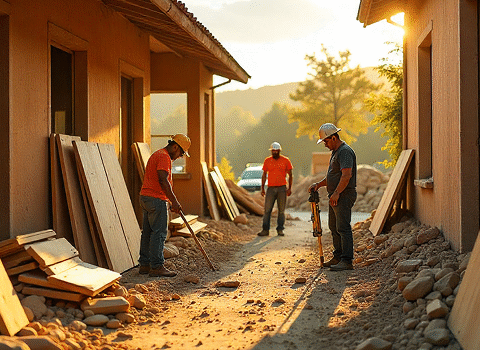
When property owners choose to deconstruct rather than demolish their buildings, they open the door to significant financial and community benefits. One of the greatest advantages is the opportunity to donate salvaged materials to qualified nonprofits and receive tax deductions in return.
However, to maximize these benefits and avoid IRS issues, donations must be IRS-compliant.
In this guide, we’ll walk you through everything you need to know about IRS-compliant deconstruction donations, including how they work, the rules to follow, and the benefits for property owners.
1. What Are Deconstruction Donations?
Deconstruction donations involve carefully dismantling a building and salvaging materials—such as lumber, cabinets, appliances, windows, doors, and fixtures—that are still usable. Instead of discarding these items, they are donated to nonprofit organizations that can reuse or resell them to support their programs.
The value of these donated materials can then be used as a charitable tax deduction if the donation process follows IRS guidelines.
2. Why IRS Compliance Matters
The IRS has strict rules regarding charitable contributions. If the donation process is not properly documented or if the valuation of materials is inflated, property owners risk audits, penalties, or the denial of their deduction.
Following IRS compliance ensures that:
- Your donation is legally recognized.
- You receive the maximum deduction allowed.
- Nonprofits benefit from your contribution in a transparent, ethical way.
3. Key IRS Requirements for Deconstruction Donations
To qualify for tax deductions, property owners must meet several critical requirements:
a) Donate to a Qualified 501(c)(3) Nonprofit
Only donations made to IRS-recognized charitable organizations are eligible for deductions. Materials must be accepted by nonprofits such as Habitat for Humanity ReStores or other community-focused organizations.
b) Obtain a Qualified Appraisal
If the total value of donated materials exceeds $5,000, the IRS requires a professional, independent appraisal to determine Fair Market Value. The appraisal must be conducted by a qualified appraiser experienced in valuing construction materials.
c) File the Correct IRS Forms
- Form 8283: Needed for noncash charitable contributions over $500. If the donation exceeds $5,000, Section B of the form must be completed and signed by the appraiser and the nonprofit.
- Form 8282: If the nonprofit sells the donated materials within three years, they must notify the IRS using this form.
d) Maintain Proper Documentation
Keep all receipts, appraisal reports, photographs of donated items, and acknowledgment letters from the nonprofit. This documentation is critical if your deduction is ever reviewed.
4. Valuation of Donated Materials
The IRS requires that materials be valued at their Fair Market Value (FMV)—the price a willing buyer would pay and a willing seller would accept in an open market.
Valuation Examples:
- Gently used cabinets may be valued at $800.
- A set of reclaimed hardwood flooring might be worth $3,000.
- Appliances in good working condition could be valued at $1,500.
A professional appraiser ensures these valuations are accurate and defensible in case of an audit.
5. Benefits of IRS-Compliant Deconstruction Donations
Choosing the compliant path offers a powerful combination of advantages:
- 💵 Substantial Tax Savings: Property owners can save thousands of dollars through charitable deductions. The tax benefits often significantly outweigh the cost of traditional demolition.
- 💰 Reduced Disposal Costs: By donating materials, property owners avoid high disposal and hauling fees.
- 🌱 Positive Environmental Impact: Donations keep materials out of landfills, reduce carbon emissions, and conserve natural resources.
- 🤝 Community Support: Nonprofits benefit from materials that can be resold or reused, funding housing, workforce, and community programs.
6. Common Mistakes to Avoid
Steer clear of these pitfalls to ensure your donation is successful:
- ❌ Inflating Material Values: Always rely on a certified appraisal; guesswork can lead to an audit.
- ❌ Skipping Documentation: Lack of receipts, photos, or appraisal reports can result in denied deductions.
- ❌ Donating to Unqualified Organizations: Always verify the nonprofit’s 501(c)(3) status.
- ❌ Rushing the Process: Proper planning is essential for compliance and maximizing benefits.
7. Steps to Ensure IRS Compliance
Follow this checklist for a smooth, compliant donation process:
- Hire a qualified deconstruction contractor.
- Partner with an IRS-approved 501(c)(3) nonprofit.
- Arrange for a certified appraisal of salvaged materials (especially if value >$5,000).
- Complete and file the appropriate IRS forms (primarily Form 8283).
- Keep detailed records of everything: receipts, appraisals, photos, and acknowledgment letters.
Final Thoughts
IRS-compliant deconstruction donations allow property owners to transform building teardowns into powerful opportunities for savings and community impact. By following the rules carefully—partnering with qualified nonprofits, securing professional appraisals, and filing the correct paperwork—owners can unlock substantial tax benefits while contributing to sustainability and social good.
In short, compliance ensures confidence. By aligning with IRS requirements, deconstruction donations become not only a smart financial choice but also a meaningful way to give back to communities.